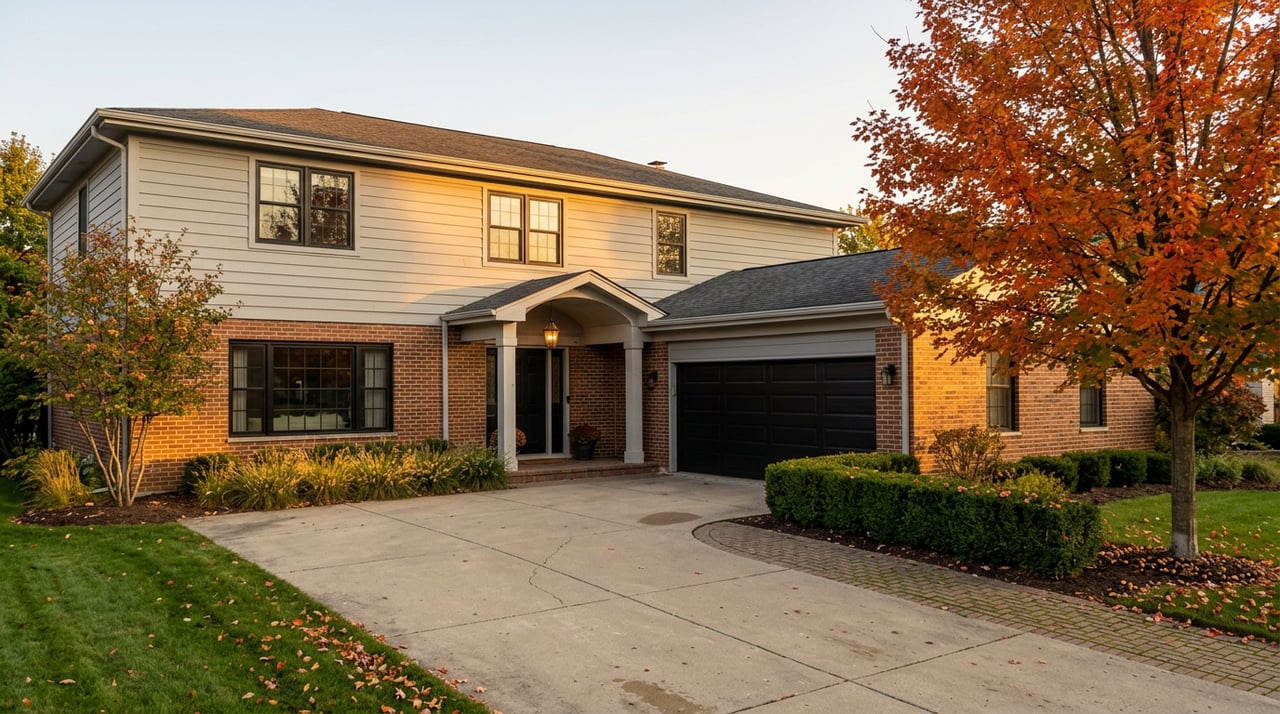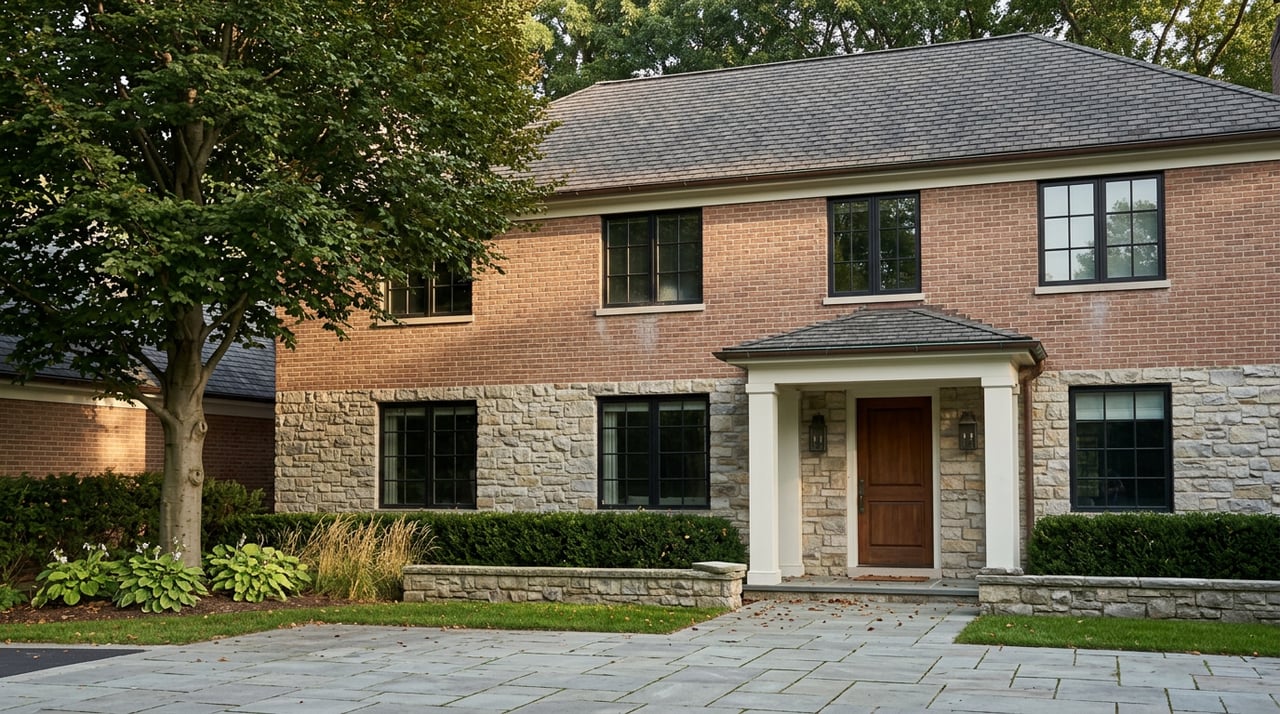
Every Oak Brook listing seems to carry the same line: no municipal property tax. It's true, and it's one of the more unusual facts in Chicago-area real estate. But the way that fact gets repeated across listing sheets and neighborhood write-ups makes it sound like a flat discount that applies the same way to every buyer. It doesn't. The size of the benefit changes sharply depending on which price tier of Oak Brook you're shopping, and by the time you reach the estate-lot end of the market, something else has already replaced it as the real carrying-cost driver.
Oak Brook's median listing price was roughly $795,000 as of May 2026. If you're comparing a listing at that price against a similarly priced home in Hinsdale or Elmhurst, the distinction is worth fifteen minutes before you write an offer.
The Levy That Isn't There
Oak Brook is one of a small number of Illinois municipalities, roughly 3% of towns statewide, that does not levy a village-level property tax on residential property at all. Out of the 34 municipalities in DuPage County, Oak Brook is consistently ranked first for the lowest combined commercial and residential property tax rates, a distinction that traces back to the village's founder, Paul Butler. His original philosophy, as it's still described by the Greater Oak Brook Economic Development Partnership, was that "the village should support itself with sales tax from local businesses."
Oak Brook's own village tax page shows a sales tax structure built to fund police, fire, and general operations.
Here's the part that gets flattened in most write-ups: removing the village layer removes exactly one line item out of several that make up a property tax bill. Oak Brook homeowners still pay DuPage County taxes, park district assessments, and school levies through Butler School District 53 for grades K-8 and Hinsdale Township High School District 86 for high school. None of those layers disappear. What disappears is the municipal slice, and that slice is a smaller share of the total bill than the marketing suggests.
Where the Savings Actually Land
Recent estimates put Oak Brook's effective property tax rate somewhere between 1.32% and 1.75%, compared with an Illinois median closer to 2.35%. That's a real gap. But a rate advantage only becomes a dollar advantage once you multiply it against an actual price, and Oak Brook's price range is wide enough that the same rate produces very different bills depending on where you buy.
| Price Tier | Typical Listing Price | Estimated Annual Property Tax* | What's In That Range |
|---|---|---|---|
| Entry condo | $400,000 - $415,000 | $5,280 - $7,260 | Oak Brook Club and similar attached-home communities |
| Entry single-family | $700,000 - $750,000 | $9,240 - $13,125 | Smaller or older detached homes |
| Luxury estate | $1.1 million median list, luxury tier | $14,520 - $19,250 | Brook Forest, Fountain Square, Midwest Club, Brandywine |
*Illustrative range calculated by applying the published effective rate range to typical list prices. Actual bills depend on assessed value, exemptions, and the specific taxing districts attached to a property's PIN. Confirm the exact bill for any home you're seriously considering before you write an offer.
The pattern in that table is the point. The percentage advantage over a comparably priced Hinsdale or Elmhurst home is the same across every tier, but the dollar value of that advantage grows with the price. A buyer at the condo tier feels the savings most directly, because a few thousand dollars a year is a meaningful swing against a $400,000 mortgage qualification. A buyer at the estate tier gets a larger raw number, but that number is competing against carrying costs that have nothing to do with tax policy at all.
What Fills the Gap at the Estate Tier
Oak Brook's most recognizable luxury subdivisions, places like The Midwest Club, Hunter Trails, and the gated sections around Oakbrook Club, come with amenities that in most towns would be publicly funded: private roads, guarded entrances, clubhouses, pools, and common-area landscaping. Someone has to pay for that maintenance, and in a gated or private association it's the homeowners, through HOA assessments rather than a municipal levy.
That's the trade a buyer at the top of the Oak Brook market is actually making. The village isn't collecting a property tax to maintain your street or your entrance gate. Your association is, through a due that scales with the size and exclusivity of the community rather than with any tax rate. Add in insurance and landscaping costs that rise with lot size, since Oak Brook's estate lots routinely run from roughly a third of an acre to two acres or more, well beyond what most DuPage suburbs offer at the same price point, and the property tax conversation stops being the most useful number to focus on. The HOA line and the maintenance line matter more at that tier than the tax line does.
The Days-on-Market Number You Read Might Not Hold
Oak Brook is a genuinely thin market. As of early August 2026, there were only 18 luxury listings active in the village, and roughly 8 single-family homes sold in the prior month. When a market moves that few transactions, any single closing can shift the average by days.
That's likely why two credible sources published different days-on-market figures within weeks of each other this year: one national listings tracker reported an average of 65 days, while a local brokerage's recent closing data put the figure closer to 46. Neither number is wrong. They're just measuring a sample small enough that one fast sale or one stale listing changes the math noticeably. If you're pricing a listing or timing an offer based on a "typical days on market" figure you found online, treat it as a rough signal rather than a fixed rule, and ask for the specific comparable closings behind it.
Comparing Oak Brook to Hinsdale or Elmhurst
If you're weighing Oak Brook against a similarly priced home in a neighboring suburb, the property tax structure is a real factor, but it's not the only one worth running the numbers on. Oak Brook addresses in Butler School District 53 feed into Hinsdale Central High School under District 86, the same high school boundary that covers parts of Hinsdale itself, so that particular advantage isn't unique to one town over the other. What Oak Brook adds on top is direct access to Oakbrook Center, sitting near the junction of I-88 and I-294, and lot sizes that, at the same price point, tend to start where many neighboring suburbs' lots stop.
The honest way to compare Oak Brook to Hinsdale or Elmhurst isn't rate versus rate. It's total annual carrying cost, tier by tier: tax bill, HOA or association dues where they apply, and maintenance scaled to the actual lot you're buying. A $750,000 Oak Brook home and a $750,000 Hinsdale home can land at very different total costs once all three of those lines are added up, and the direction of that difference isn't the same at every price point.
If you're comparing a specific Oak Brook address against homes in Hinsdale, Elmhurst, or elsewhere in DuPage County, we can pull the actual PIN-level tax history, any HOA assessment schedule, and comparable carrying costs for the subdivision you're considering, not just the village-wide averages. Angela Walker Homes works this market regularly and can put those numbers side by side before you write an offer. Get a Free Home Valuation to start the conversation, or reach out directly for a tier-by-tier cost comparison built around the specific homes you're weighing.
This article is general information, not legal, tax or financial advice. Consult a qualified professional about your situation.